Birdfy Rookie Review: Cheap, Clever and a Bit Fiddly
 By Alana Collins
A slow-motion clip of a goldfinch landing on a feeder is the kind of thing that sends you off to check prices. Then you find the Birdfy Rookie sitting under $100 and start wondering what got cut to hit that number. Fair question, and this Birdfy Rookie review is built around answering it.
I went through Birdfy's own spec sheets, retailer listings, owner reviews and independent testing to see how it holds up. The short version: it's a good first smart feeder with a few habits you should know about before you screw it to a fence.
Birdfy Rookie at a glance
| Price | About $70 to $110 depending on retailer and sale |
| Camera | 1080P at 30fps, or 1280x960 at 60fps for slow motion |
| Video format | Vertical (9:16), fixed side camera |
| Seed capacity | 1.3 L (44 oz) |
| Weight | 0.96 lb (435 g) |
| Power | 5200mAh rechargeable battery, solar panel sold separately |
| Wi-Fi | 2.4GHz only |
| Weather rating | IP66, works from 14°F to 113°F |
| Storage | Cloud, 30 days free. No micro SD replay |
| Warranty | 2 years |
Where the Rookie sits in the Birdfy range
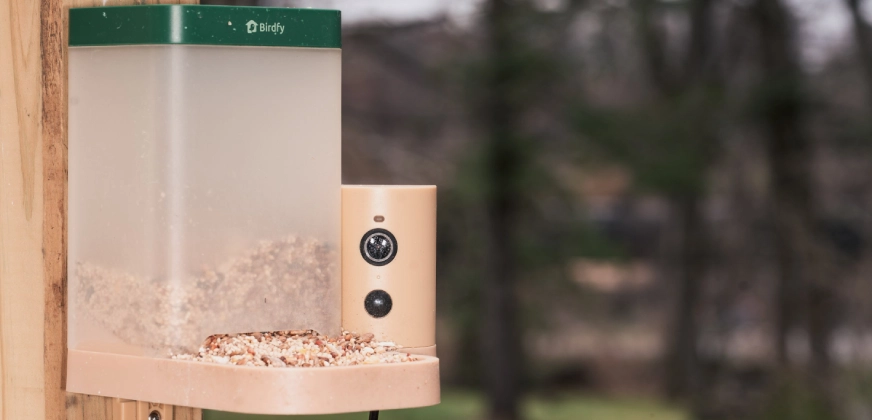
Birdfy is the smart feeder brand from Netvue, and the Rookie, which arrived in 2025, is its entry-level model. The interesting part is what Birdfy didn't cut. Digital Camera World's reviewer, who ran one in a UK garden for several months, points out that it uses the same camera module as the much pricier Birdfy Wood. So the lens isn't where the savings come from. They come from swapping fir wood for recycled plastic and leaving out the built-in solar roof.
Setup takes about ten minutes
Download the Birdfy app, make an account, tap Add Device, scan the QR code on the camera and join your Wi-Fi. There's a printed walkthrough in the box, and the camera simply drops into the base, so there's almost nothing to assemble. The mounting kit covers most situations: hose clips for a pole, a hanging bracket, a drilling template, and screws for wood or concrete.
Two things trip people up. The Rookie only connects on 2.4GHz Wi-Fi, so if your router blends both bands under one name you may need to split them for pairing. And distance matters. The app scores your signal out of 100, and the Digital Camera World tester's feeder sat at 32, which meant the live view took around eight seconds to load. Fine for a quick look, a bit slow if you're impatient.
The vertical camera decides whether you'll like it
The camera sits on the side of the feeder and records portrait video. That's the Rookie's whole personality. Clips fill a phone screen with no cropping, so sharing to Instagram or a family group chat takes seconds. Play the same clip on a TV or laptop and you get a narrow strip with black bars on both sides.
The bigger limit is that the camera is fixed. You can't tilt it, and it doesn't cover the whole feeding area. The perch space is small, so birds sometimes land close enough that the picture drifts out of focus, and larger birds like jackdaws get cropped out of frame. Tits, robins, finches and sparrows are no trouble. One owner on Birdfy's own site gave four stars purely because the camera misses part of the tray.
Birds do find it quickly, though. A reviewer who put one on a balcony says finches, sparrows and a cardinal turned up within three days. Worth remembering that review sits on the brand's own page.
Video quality, slow motion and night mode
Standard recording is 1080P at 30fps. Flip to 60fps in the app and the resolution drops to 1280x960, but you get slow-motion clips, and that switch costs nothing. In bright sun the footage is sharp enough that Digital Camera World's reviewer could pick out individual feather barbs, and rated it the best they'd tested on any smart feeder apart from the Wood, which shares the camera. On flat grey days the colours go muted, which is normal for a camera this size. Fast wing flutters still smear a little, even at 60fps.
Two small annoyances. With no roof over the lens, it fogs up on misty mornings and after frost, so you'll be wiping it now and then. And the microphone is one-way and average: you'll hear a beak clack on the perch, not birdsong worth recording. Night vision uses a white-light mode and there's no two-way audio, so I wouldn't count on it as a backyard security camera.
Battery life: read the claim carefully
Birdfy says one charge can last up to four months. The Digital Camera World tester got about four weeks, with the battery down to 40% by week three. A buyer on Birdfy's site wrote that before adding a solar panel, the battery had to come indoors every other day. Same feeder, very different results, and it comes down to how busy your feeder is, how high you set the clarity slider, your Wi-Fi signal and the cold.
The part that bothers me is that the tester never got a warning when the battery ran flat, and lost a few days of footage without noticing. So check the battery level in the app yourself.
The fix is Birdfy's separate solar panel, which plugs into the camera. That same buyer says the battery hasn't died since adding one. Without it, you're taking the camera down for a USB-C charge every few weeks.
What you pay after you buy it
This is where older reviews can mislead you. Earlier in 2026, species identification on the Rookie cost $4.99 a month on the base model, or you picked a lifetime option at a higher upfront price. Birdfy has since said that Bird ID, meaning automatic identification across 6,000+ species, is free for life on all its devices from November 1, 2026. If you read a review complaining about the subscription, that point is out of date.
Paid memberships (Plus and Pro) still exist. They add the finer details: male versus female, juvenile versus adult, possible sick-bird alerts, and non-bird visitors like squirrels. Cloud storage keeps clips for 30 days at no charge, and there's no micro SD replay, so anything you want to keep longer needs saving to your phone or a paid plan. One practical tip: some retailer listings still say "AI by Subscription" in the title, so read the listing carefully before you pay.
Birdfy products worth comparing with the Rookie
Prices below are rough ranges, because Birdfy discounts constantly and every retailer prices it differently.
Birdfy Feeder Rookie
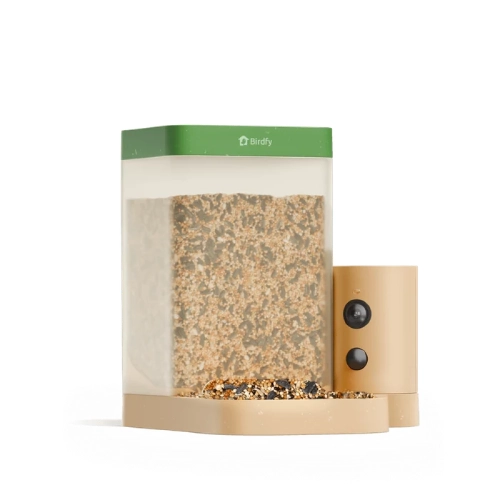
The one this review is about, at around $70 to $110. Best for balconies, windows and small gardens, and for anyone who'd rather not spend $200 to find out whether they enjoy this hobby.
Birdfy Solar Panel (Type C)
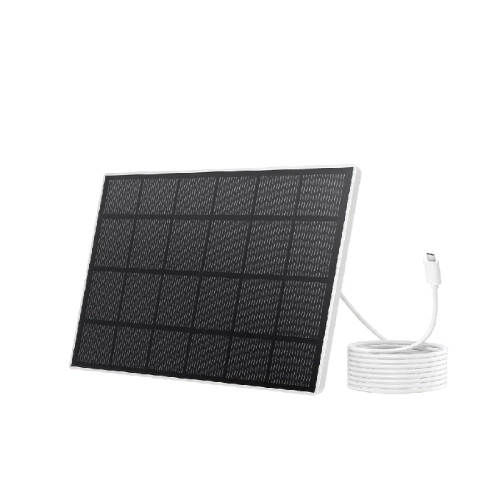
Sold separately, roughly $30 to $55 depending on the version and the sale. If the Rookie is going on a fence post or pole where you can't easily bring it inside, treat the panel as part of the price.
Birdfy Feeder Wood
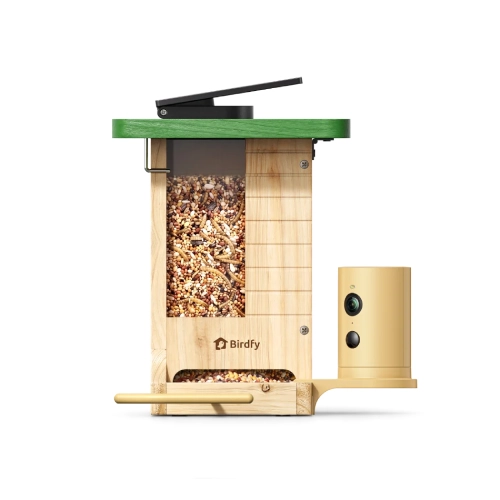
Same camera module, but with a fir wood body, a built-in solar roof and landscape video. Digital Camera World puts it roughly $50 above the Rookie. If the charging chore or the plastic look bothers you, it's the logical step up, and the wider feeding area helps with the cropping problem too.
Birdfy Feeder 2 Pro
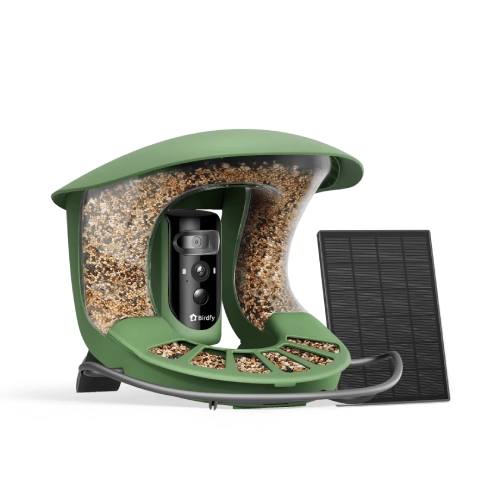
Two cameras, a 2K portrait lens plus a 1080P wide-angle, with a solar panel in the box. Prices run roughly $200 to $330 depending on the sale. It fixes the Rookie's biggest limits, the single fixed angle and the charging, but costs two to three times as much.
Birdfy Bath Pro
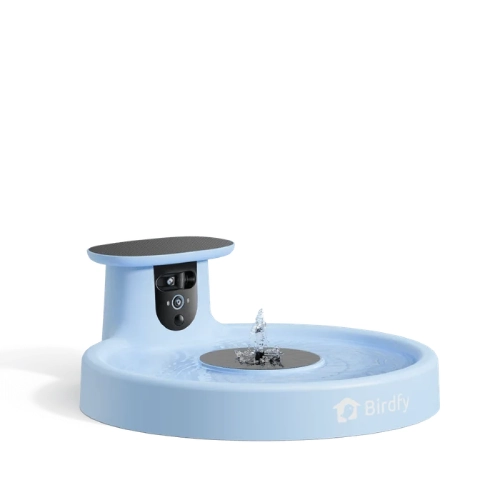
A smart bird bath with a camera, for people who'd rather watch drinking and splashing than feeding. Usually about $260 to $350. It's less of a Rookie alternative and more of a second device once you're hooked.
If you're also eyeing Bird Buddy, Digital Camera World says its stills are 5MP against the Rookie's 2MP and its app is a touch slicker, though it costs noticeably more.
Who should buy the Birdfy Rookie, and who shouldn't
Buy it if:
- It's your first smart feeder and you want to test the hobby cheaply
- You have a balcony, a small garden or a window to mount it on
- You mostly share clips from your phone
- Kids or grandparents will be using the app
- Your regulars are small birds like finches, tits and sparrows
Skip it if:
- You want wide landscape footage for a TV or laptop
- You want to angle the camera yourself
- You don't want to deal with charging or buying a solar panel
- Your winters regularly fall below 14°F, the bottom of its working range
- You'll hang it at head height and struggle to lift it down. One 73-year-old buyer found the hanging clips awkward and couldn't remove the feeder to refill it
FAQs
Is the Birdfy Rookie worth it?
For a first smart feeder, yes. You get the same camera Birdfy uses in pricier models, easy setup and free bird identification. The trade-offs are a fixed portrait view, plastic build and a battery you'll need to manage.
Does the Birdfy Rookie need a subscription?
Not for basics. Birdfy says species ID is free for life on all its devices from November 1, 2026, and cloud clips are kept for 30 days at no charge. Plus and Pro memberships are optional and add details like sex, age and sick-bird alerts.
Does the Birdfy Rookie come with a solar panel?
No. It runs on a 5200mAh rechargeable battery and charges over USB-C. A solar panel is sold separately.
How long does the Birdfy Rookie battery last?
Birdfy claims up to four months per charge. One independent tester got about four weeks, and one owner reported charging far more often before adding solar. Your result depends on how busy the feeder is and your settings.
Is the Birdfy Rookie waterproof?
It has an IP66 rating and is built for rain and snow, with a working range of 14°F to 113°F. The lens can fog in damp weather, and one tester had the lid blown off in a storm because it wasn't snapped on fully.
Does the Birdfy Rookie work on 5GHz Wi-Fi?
No. It only connects to 2.4GHz networks.
The Birdfy Rookie review verdict
The Birdfy Rookie is an honest budget feeder. The camera is the same one Birdfy puts in pricier models, setup takes minutes, and the 4.8 out of 5 on Birdfy's own store (from 59 reviews) lines up with what independent testing found: it's pleasant to use and it works. The compromises are real, though. The camera is fixed and portrait-only, the body is plastic, there's no solar in the box, and battery life depends heavily on how you use it.
With species ID now free, the worry about ongoing costs has mostly gone. Buy it with the solar panel if it's going somewhere hard to reach, and keep your expectations pitched at small birds. If you already know you want wide-angle video, spend the extra on the Wood or the Feeder 2 Pro instead.
Do you agree with our review?
Comments (0)
All comments are reviewed and approved by an admin before appearing publicly.
No comments yet - be the first to share your thoughts.
Ask a Question
Got a question about this review or the brand? Ask below - our team answers what we can, and it'll appear here for other readers too.