
Cole and Mason Review: The Lifetime Bit Is Not the Whole Mill
 By Alana Collins
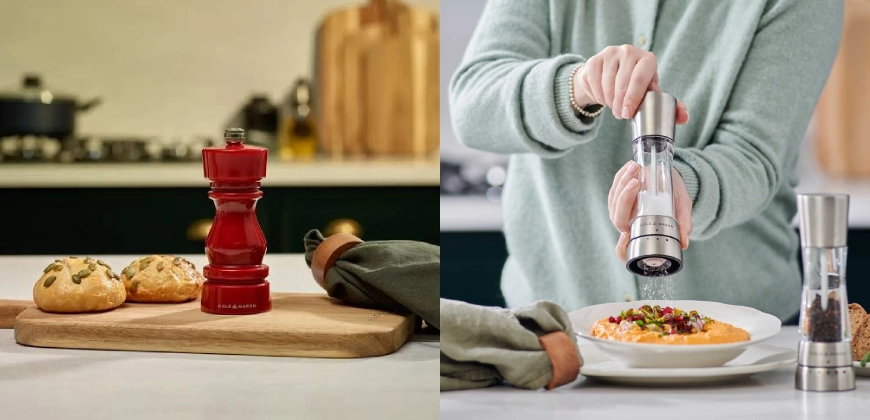
Lifetime guarantee is printed on the box and it is true. It is also narrower than it sounds.
What carries the lifetime cover is the grinding mechanism, and what carries two years is everything around it, which is the part that gets dropped. This Cole and Mason review starts by separating the two.
Read the Warranty as Two Warranties
| What is covered | How long | Note |
| Precision or Gourmet mechanism | Lifetime | Original purchaser only |
| Standard mechanism | 10 years | A different tier, so check |
| The body of the mill | 2 years | The part that actually fails |
| Battery operated mills | 2 years | No lifetime element |
| Return postage on a claim | Possibly yours | You may be asked to send it |
Lifetime on the mechanism. Two years on the body. Those are different promises about different parts.
The published warranty splits by product and by component, and the split matters because the failure you are likely to have is not the one with the long cover.
A hardened steel burr grinding dry peppercorns barely wears, which is why a lifetime guarantee on it costs the manufacturer very little and is a fair thing to offer. The acrylic barrel, the finish, the cap and the adjustment collar are the parts that crack when a mill goes off a worktop, and those have two years.
There is a second thing to check before you buy. Lifetime applies to mills with a Precision or Gourmet mechanism, while a Standard mechanism gets ten years, so the word lifetime belongs to a tier rather than to the brand, and the product page is where you confirm which one you are looking at.
Claims need photographs of the fault, a shot showing the brand name and proof of purchase, and you may be asked to return the item at your own expense, so keep the receipt somewhere you will find it in eight years.
Why the Two Mills Are Built Differently
| Mill | Mechanism | Why that material |
| Pepper | Hardened carbon steel | Sharp enough to strip a peppercorn |
| Salt | Ceramic | Salt corrodes steel, ceramic does not |
| Grind settings, pepper | 6 | Fine powder up to coarse |
| Grind settings, salt | 3 | Fewer, because salt needs fewer |
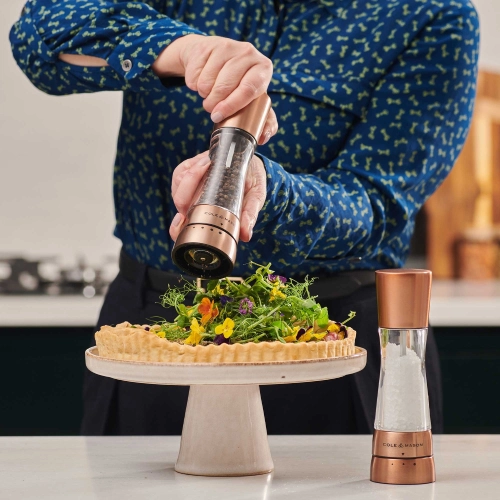
Carbon steel for pepper, ceramic for salt. This is the reason you cannot just fill a pepper mill with salt.
A peppercorn is hard and brittle, so it wants a sharp metal burr that strips and cracks it rather than crushing it, and hardened carbon steel does that job better than ceramic.
Salt is the opposite problem. It is softer but corrosive, and it will rust a steel mechanism from the inside, which is why the salt mill uses ceramic and why swapping the contents of the two is the most common way people destroy a good pepper mill.
The grind settings follow the same logic, with six steps on the pepper mill because pepper genuinely behaves differently from powder to crack, and three on salt because salt does not.
Is It Worth Sixty Dollars
| Cost per year of use | Spend | Per year |
| Disposable grinders, two a year | $10.00 a year | $10.00 |
| Derwent pepper mill over 5 years | $59.95 once | $11.99 |
| Derwent pepper mill over 10 years | $59.95 once | $6.00 |
| Derwent pepper mill over 20 years | $59.95 once | $3.00 |
Break-even against disposable grinders lands at exactly 6.0 years.
A single Derwent pepper mill is about $59.95, and the pair with the salt mill is $109.95, which saves $9.95 against buying them separately.
Set that against the throwaway alternative. Pre-filled grinders at around five dollars, replaced twice a year, cost ten dollars annually, so the mill pays for itself in six years and then keeps going, dropping to $6.00 a year at ten years and $3.00 at twenty.
Whole peppercorns bought in bulk are also cheaper per gram than the same pepper in a disposable grinder, so the real payback arrives sooner than six years, and that is before the difference in how the pepper tastes.
The Derwent has also been named an all time favourite pepper mill by America's Test Kitchen, which is a genuinely independent verdict from people who test in volume rather than a brand claim.
The One Recurring Complaint
Clogging is the fault that appears most often, and it is a humidity problem rather than a manufacturing one.
Peppercorns that have absorbed moisture swell slightly and gum the burr, so a mill kept next to a kettle or above a hob will jam in a way the same mill on a dry shelf never does, and that is worth knowing because it is entirely preventable.
- Store peppercorns dry and away from steam
- Keep the mill off the windowsill above the sink
- Never put salt in the pepper mill
- Empty and brush the burr if the grind turns uneven
Reviewers also mention that finding the right setting takes a few goes, which is true of any six position mill and stops being an issue once you find yours.
Who Should Buy
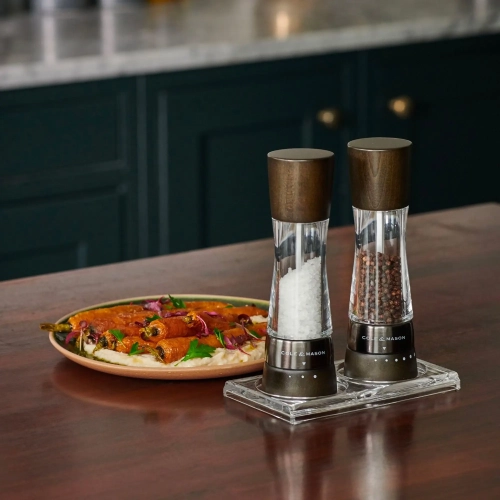
Buy if you use pepper most days, you want a mill that will still be working in a decade, and you will keep it somewhere dry.
Look elsewhere if you grind pepper twice a month, in which case the payback never really arrives, or if you want a battery mill, since those carry two years and no lifetime element at all.
Final Verdict
| Category | Score |
| Grind Consistency | 9 / 10 |
| Mechanism Durability | 9 / 10 |
| Build And Looks | 8 / 10 |
| Body Warranty Length | 5 / 10 |
| Performance In Humidity | 5.5 / 10 |
| Overall Score | 8 / 10 |
Eight out of ten. The grind is consistent across all six settings, the hardened carbon steel mechanism carries a genuine lifetime guarantee, the salt mill uses ceramic for the right engineering reason, America's Test Kitchen rates the Derwent an all time favourite, and at ten years it costs $6.00 annually against $10.00 for disposables. What holds it back is two years on the body rather than the mechanism, return postage that may fall on you, and a tendency to clog in humid kitchens. Anyone reading a Cole and Mason review should confirm their model has a Precision or Gourmet mechanism before relying on the word lifetime.
FAQs
How much is a Cole and Mason Derwent?
About $59.95 for the single pepper mill and $109.95 for the salt and pepper pair.
What does the lifetime guarantee cover?
The grinding mechanism on Precision and Gourmet mills, for the original purchaser. Standard mechanisms get ten years.
How long is the body covered?
Two years, which is the shorter of the two periods and covers the parts most likely to break.
Can I put salt in the pepper mill?
No. The pepper mechanism is carbon steel and salt corrodes it. The salt mill uses ceramic for that reason.
Why has mine started clogging?
Usually moisture in the peppercorns. Store them dry and away from steam, and clean the burr.
Is it worth the money?
Against disposable grinders it breaks even at six years, then costs $6.00 a year at ten and $3.00 at twenty.
Do you agree with our review?
Comments (0)
All comments are reviewed and approved by an admin before appearing publicly.
No comments yet - be the first to share your thoughts.
Ask a Question
Got a question about this review or the brand? Ask below - our team answers what we can, and it'll appear here for other readers too.