Alitura Clay Mask Review: Reading the Label Against the Marketing
 By Alana Collins
The brand sells this on two ideas: that it is 100% natural and that it works. This Alitura clay mask review takes the first one seriously and checks it against the brand's own ingredient list.
The list is good. The claim on top of it is not quite right, and the difference is worth understanding before you spend $65.
What Is Actually In It
| Listed ingredient | Type | Note |
| Rhassoul, green illite, bentonite, kaolin | Four clays | The base of the mask |
| 10% L-ascorbic acid | Clinical active | Not a plant extract |
| Grass fed colostrum | Dairy derived | So not vegan |
| Freshwater pearl powder | Mineral | Marketing led |
| American ginseng, organic kelp | Botanical | Plant derived |
| Total ingredients listed | Nine | Not a full INCI list |
Four clays, one clinical active, one dairy ingredient, three botanicals.
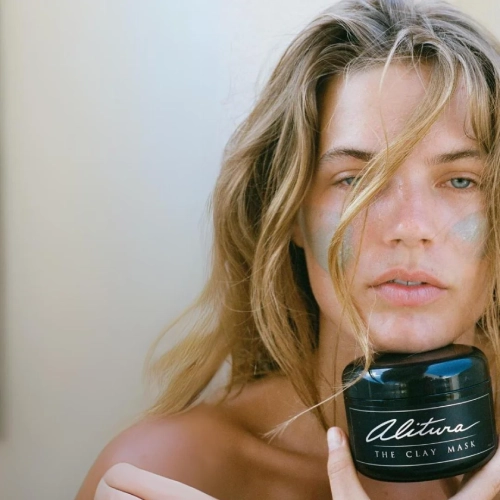
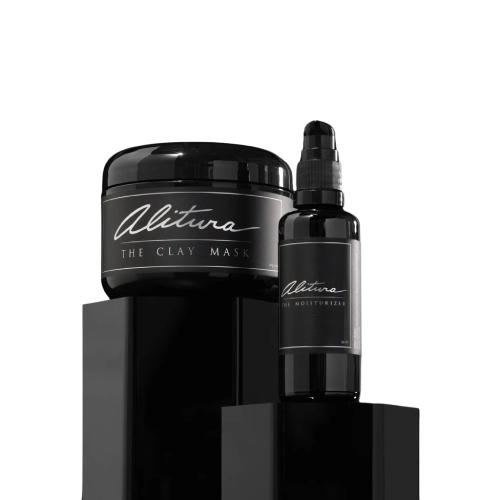
Nine ingredients are named. Four of them are clays, which is what makes this a clay mask rather than anything exotic: rhassoul, French green illite, calcium bentonite and Canadian kaolin.
Then it gets more interesting. There is 10% L-ascorbic acid, grass fed colostrum, freshwater pearl powder, American ginseng and organic kelp powder.
One thing to flag immediately. Nine named ingredients is not a full INCI list, which is the standardised naming every cosmetic label uses. For a brand whose entire proposition is ingredient transparency, publishing a highlights list rather than the complete one is an odd gap.
The 100% Natural Problem
| The claim against the label | Detail |
| Brand states | 100% natural, zero fillers, zero toxins |
| Label includes | 10% L-ascorbic acid |
| That ingredient is | A clinical strength active |
| Is that a problem? | No, it is probably why it works |
| Our point | 100% natural does not describe it |
| Also note | Non toxic is not a regulated term |
10% ascorbic acid sits awkwardly next to 100% natural.
Here is the finding, and we want to be careful about what it does and does not mean.
The brand states its products are 100% natural with zero fillers and zero toxins. The same brand's label for this product includes 10% L-ascorbic acid, which is pure vitamin C at clinical strength and is manufactured rather than extracted from a plant.
That is not a criticism of the formula. Ascorbic acid at 10% is a well established, well studied skincare active, and it is very likely one of the main reasons people report results from this mask. We would rather have it in there than not.
The criticism is only of the wording. A product containing a 10% lab made active is a good product, but it is not what most people picture when they read 100% natural, and the two statements sit on the same website.
Worth adding that non toxic and zero toxins are not regulated terms in cosmetics, so they tell you nothing verifiable regardless of which brand uses them.
It Is Also Not Vegan
A smaller point that catches people out.
The mask contains grass fed colostrum, which is a dairy derived ingredient. Shoppers frequently read natural as a synonym for vegan and they are different things entirely.
The brand does not claim this product is vegan as far as we could see, so this is not a contradiction. It is simply something to know if that matters to you, because the word natural on the front will not tell you.
What It Costs
| What it costs | Figure |
| One 7.1 oz jar | $65.00 |
| Per ounce | $9.15 |
| Stated supply | 45 to 60 days |
| Cost per day at that rate | $1.08 to $1.44 |
| Three pack | $179.00 |
| Saving against three singles | 8.2% |
$65 a jar, or $9.15 an ounce.
A 7.1 oz jar is $65.00, which works out at $9.15 an ounce. The brand describes it as a 45 to 60 day supply, so by our arithmetic that is $1.08 to $1.44 a day.
A three pack is $179.00 against $195.00 for three singles, a saving of 8.2%. That is a thin discount for committing to roughly six months of product, and the brand also advises using each product within six months of opening, so buying three at once leaves little margin.
The Number That Actually Matters
| Cost per actual use | Figure |
| Directed frequency | 1 to 3 times a week |
| Uses in a 52 day jar | About 7 to 22 |
| Cost per use at 3 a week | About $2.92 |
| Cost per use at 1 a week | About $8.75 |
| So frequency changes the cost by | Three times |
Between $2.92 and $8.75 per use, depending how often you use it.
Per ounce pricing is misleading for a mask because you do not use it daily, so cost per use is the figure that matters. The directions say one to three times a week.
Over a 52 day jar that is roughly 7 to 22 applications, which puts the cost per use between about $2.92 and $8.75. The same jar is three times more expensive per use for a once a week user than for a three times a week user.
Cost per use is the honest way to think about value here. If you are a person who buys a mask, uses it twice and forgets about it, this is an expensive jar of clay. If you genuinely mask three times a week, under $3 a session is reasonable for this ingredient list.
- Work out your real frequency before buying
- Buy one jar, not the three pack, the first time
- Patch test, the page gives no instructions for it
- Use within six months of opening
How You Are Meant to Use It
| How it is meant to be used | Instruction |
| Mix | One tablespoon with equal water |
| Consistency | Like toothpaste |
| Leave on | 20 to 30 minutes, until dry |
| Sensitive skin | 10 to 15 minutes, rinse before dry |
| Apple cider vinegar option | Avoid if skin is sensitive |
| After opening, use within | 6 months |
Mix with water, 20 to 30 minutes, less for sensitive skin.
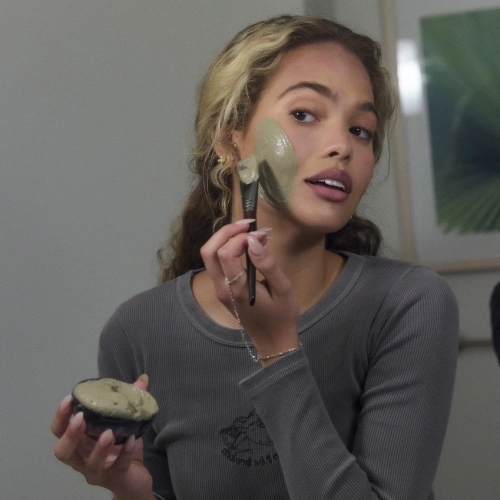
This is a dry powder you mix yourself, one tablespoon to an equal part of water, to a toothpaste consistency.
It goes on everywhere except around the eyes for 20 to 30 minutes until completely dry, then rinses off. The brand's own FAQ suggests sensitive skin should start once a week, leave it on for only 10 to 15 minutes, and rinse before it fully dries.
The page also offers apple cider vinegar as a substitute for water, while separately advising that sensitive skin should avoid that substitution. Both pieces of advice are on the same product, which is fine, but you have to read carefully to catch the second one.
What the Page Leaves Out
| What the page does not include | Detail |
| Patch test instructions | Not on the page we read |
| Full INCI ingredient list | Nine ingredients named only |
| What it does include | An FDA style disclaimer |
| And | Advice to see a physician first |
| Our suggestion | Patch test anyway |
No patch test instructions on a product containing a 10% acid.
We looked for patch test guidance on the product page and could not find any.
That stands out on a product that contains a 10% acid, four clays, and an optional vinegar mix. We are not saying the product is unsafe and we have no basis to. We are saying that patch testing is standard advice for an active product and its absence is a gap.
To be fair, the page does carry an FDA style disclaimer stating the products are not intended to diagnose, treat, cure or prevent disease, and advises consulting a physician before use if you have a pre existing skin condition. That is more than many brands in this space bother with.
The Reviews You Cannot Check
| The review record | On the brand's site | Independent platform |
| Rating | 4.9 out of 5 | 3.7 out of 5 |
| Number of reviews | 1,310 | 1 |
| Profile status | Brand hosted | Unclaimed |
| Reviews invited by the brand | Presumably | Platform says no |
| What we can verify | Nothing independently | Almost nothing |
1,310 reviews on the brand's own site, one on the independent platform.
This is the part of our Alitura clay mask review we would weigh most heavily, and it is not an accusation.
The product page shows 4.9 out of 5 from 1,310 reviews, with 98% saying they would recommend. On the main independent review platform the brand's profile is unclaimed and carries a single review, with that platform noting the company has not invited customers to review and that its reviews may not be representative.
Brand hosted review widgets are completely normal and those 1,310 reviews may be entirely genuine. The issue is simply that none of it is independently verifiable, because the brand controls the platform the reviews sit on.
So treat the 4.9 as what it is. It is a strong signal from the brand's own customers, collected and displayed by the brand, and there is no outside record to check it against.
Final Verdict
| Category | Score |
| Ingredient Quality As Listed | 8 / 10 |
| Fragrance Free Formulation | 9 / 10 |
| Accuracy Of Marketing Claims | 4.5 / 10 |
| Independent Verification | 3 / 10 |
| Value For Money | 5 / 10 |
| Overall Score | 6.5 / 10 |
Six and a half out of ten. The formula looks genuinely good, combining four clays with 10% L-ascorbic acid in a fragrance free powder you mix fresh, and there is a 30 day money back guarantee behind it. The marks come off for claims and verification rather than for the product. A mask containing a 10% lab made active is not accurately described as 100% natural, the page publishes nine ingredients rather than a full INCI list, there are no patch test instructions on an active product, and the 4.9 rating from 1,310 reviews sits on the brand's own site while the independent platform holds a single unclaimed review. At $2.92 to $8.75 per use depending on frequency, buy one jar, patch test it, and decide from there.
FAQs
How much is the Alitura clay mask?
$65.00 for a 7.1 oz jar, which is $9.15 an ounce, or $179.00 for three jars, a saving of 8.2%.
Is it really 100% natural?
It contains 10% L-ascorbic acid, a manufactured clinical strength active. That is a good ingredient, but 100% natural is not an accurate description of a formula containing it.
Is it vegan?
No. It contains grass fed colostrum, which is dairy derived.
How often should you use it?
The brand says one to three times a week, starting once weekly for sensitive skin with a shorter 10 to 15 minute application.
What does it cost per use?
Between about $2.92 and $8.75, depending on whether you use it three times a week or once.
Are the reviews reliable?
The 4.9 from 1,310 reviews is hosted on the brand's own site. The main independent platform has one review and an unclaimed profile, so there is no outside record to compare.
Do you agree with our review?
Comments (0)
All comments are reviewed and approved by an admin before appearing publicly.
No comments yet - be the first to share your thoughts.
Ask a Question
Got a question about this review or the brand? Ask below - our team answers what we can, and it'll appear here for other readers too.