
Rapsodo Launch Monitor Review: The Sticker Is Half the Bill
 By Alana Collins
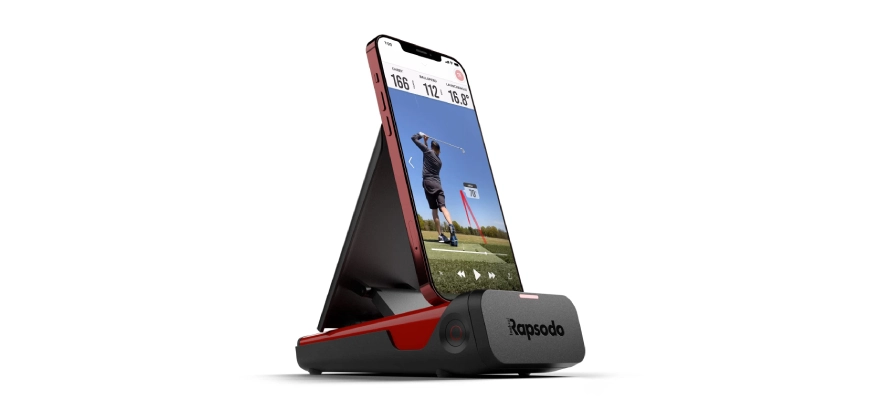
The MLM2PRO is a genuinely good piece of kit at a price that reads like a bargain against a twenty thousand dollar cabinet.
It is also a subscription business wearing a hardware costume, and this Rapsodo launch monitor review is mostly about working out what three years of it costs.
The Real Price
| What you actually pay | Cost | Running total |
| MLM2PRO unit | $599.99 | $599.99 |
| One year of membership | $199.99 | $799.98 |
| Three years of membership | $599.97 | $1,199.96 |
| Lifetime membership instead | $599.99 | $1,199.98 |
| A dozen RPT balls | $69.99 | $5.83 each |
Three years of membership costs $599.97. The device costs $599.99. They are the same number.
The unit is $599.99 on offer against a $699.99 list, and the premium membership is $199.99 a year, so three years of ownership comes to $1,199.96, which is exactly twice the hardware.
Lifetime access is offered at $599.99, and the arithmetic there is unusually clean, because dividing lifetime by annual gives exactly three years to break even.
So the decision is simple. Keep it past three years and lifetime wins, sell it inside three and annual wins, and a two year bundle at $329.99 sits in between and saves 17.5% against paying annually twice.
The balls are the part people forget, since the spin claim depends on Rapsodo's marked RPT balls at $69.99 a dozen, which is $5.83 a ball, and three come in the box.
What the Membership Actually Locks
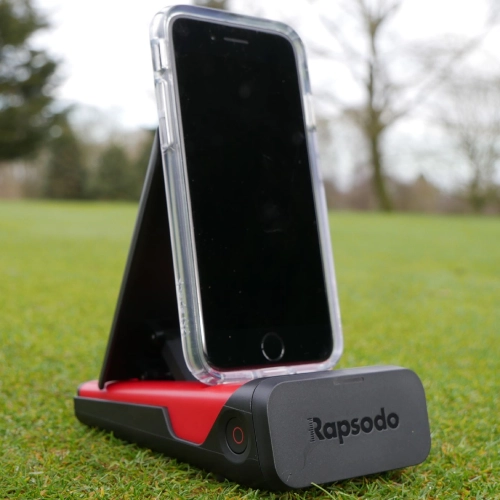
| Works without a membership | Needs the membership |
| Ball speed and club speed | Measured spin rate |
| Launch angle and direction | Spin axis, with RPT balls |
| Carry distance | Measured club path and angle of attack |
| Target range with 72 targets | 30,000 courses and session history |
| Recording your shots | Impact Vision and third party sim software |
Ball speed and distance are free. Spin rate, the reason most people buy a launch monitor, is not.
Without a premium membership you get a usable range toy. Ball speed, club speed, launch angle, direction and carry, plus a target range and shot recording, which is enough to see whether a change helped.
What sits behind the paywall is the diagnostic half. Measured spin rate, spin axis, club path and angle of attack are the numbers that tell you why a shot did what it did rather than what it did, and those are the numbers a fitter or a coach would ask for.
That is a fair commercial choice and it should be a visible one. A shopper comparing this against a rival that includes spin rate in the box is not comparing $599.99 against that rival, they are comparing $799.98 for the first year.
Where It Is Accurate and Where It Is Not
| Accuracy by club | Against a premium unit | Verdict |
| Irons and wedges | Within 200 to 300 RPM | Close to serious kit |
| Driver spin | 2,100 to 3,800 RPM reported on matched swings | A 1,700 RPM spread |
| That spread as a share | 57.6% of the midpoint | Too wide to tune with |
Irons land within 200 to 300 RPM of far more expensive units. Driver spin is the weak spot and it is not close.
On irons and wedges the independent testing is genuinely complimentary, putting it within a couple of hundred revolutions of units costing several times as much, which for a portable device on a driving range is a real achievement.
Driver is a different story. Reported spin on matched swings has ranged from 2,100 to 3,800 RPM, a spread of 1,700 revolutions, and that is 57.6% of the midpoint of the range.
Think about what you would do with that. Driver spin is the number you chase when choosing a shaft or a head, and a reading that can move by more than half its own value between two identical swings cannot settle that question, so a fitting still needs a fitting.
- Use it for iron gapping and it will pay for itself
- Use it for wedge distance control and it is excellent
- Use it to track swing speed changes over months
- Do not use it to pick a driver shaft
Who It Is Really For
The honest customer here is a mid handicap player who practises regularly and wants their own numbers between lessons.
A portable unit that fits in a bag, works outdoors on a range and indoors into a net, gives trustworthy iron data and turns winter into 30,000 courses is a lot of golf for the money, and the subscription stops feeling expensive when it replaces a bay fee twice a month.
The person it is not for is the occasional player. Somebody hitting balls six times a year is paying $199.99 annually for spin rate they look at twice, and the free tier or a cheaper unit serves them better.
Who Should Buy
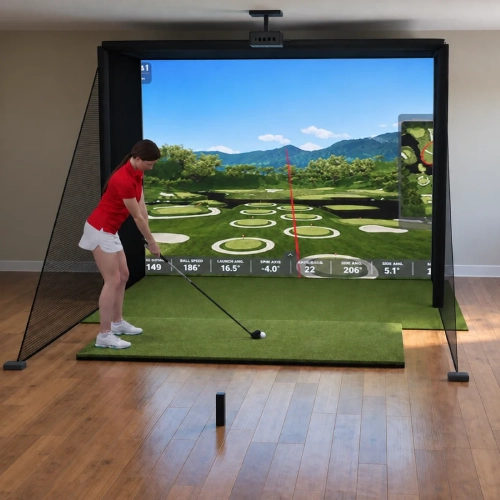
Buy if you practise most weeks, you care most about irons and wedges, and you have priced in either the annual or the lifetime membership before deciding.
Look elsewhere if driver data is your reason for buying, if you will not pay a subscription on principle, or if you need certified numbers for a club fitting rather than a practice trend.
Final Verdict
| Category | Score |
| Iron And Wedge Accuracy | 8.5 / 10 |
| Portability | 9 / 10 |
| Software And Courses | 8 / 10 |
| Driver Spin Reliability | 4 / 10 |
| Total Cost Honesty | 4 / 10 |
| Overall Score | 7 / 10 |
Seven out of ten. Iron and wedge data within 200 to 300 RPM of units costing several times more is the achievement here, the unit is genuinely portable, and the course library makes winter practice bearable. What pulls it down is the total bill, with three years of membership costing $599.97 against a $599.99 device, spin rate locked behind that membership, RPT balls at $5.83 each to hit the accuracy claim, and driver spin swinging 1,700 RPM on matched swings. Anyone reading a Rapsodo launch monitor review should decide on the lifetime plan or the annual one before buying, not after.
FAQs
How much is the Rapsodo MLM2PRO?
$599.99 on offer against a $699.99 list, with the premium membership charged separately.
Is the subscription required?
No, but spin rate, spin axis, club path and angle of attack all need it, as do the simulated courses.
How much is the membership?
$199.99 a year, $329.99 for two years, or $599.99 for lifetime, which breaks even against annual at exactly three years.
Do I have to buy special balls?
For the measured spin claim, yes. RPT balls are $69.99 a dozen, or $5.83 each, and three come in the box.
How accurate is it?
Within 200 to 300 RPM of premium units on irons. Driver spin has been reported swinging between 2,100 and 3,800 RPM on matched swings.
Can I use it for a club fitting?
For irons it is informative. For driver decisions the reported variance is too wide to rely on.
Do you agree with our review?
Comments (0)
All comments are reviewed and approved by an admin before appearing publicly.
No comments yet - be the first to share your thoughts.
Ask a Question
Got a question about this review or the brand? Ask below - our team answers what we can, and it'll appear here for other readers too.