Sleep Cycle App Review: What to Trust and What to Ignore
 By Alana Collins
Upfront: there are affiliate links in this article and we're paid when they're used. We've still spent most of it explaining which half of the app's own data you shouldn't believe.
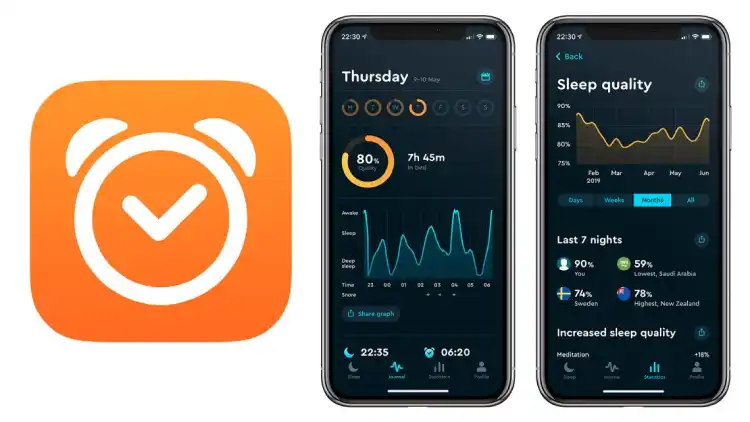
Every sleep app hands you the same screen in the morning. A number for deep sleep, a number for light, a tidy little hypnogram.
Some of that is measured. Quite a lot of it is inferred, and the app doesn't distinguish between the two for you. So this Sleep Cycle app review sorts the output into things worth acting on and things worth glancing at and forgetting.
How It Tracks You Without a Wearable
- Uses the phone's microphone and accelerometer, left on the nightstand
- Listens for movement, breathing sounds and snoring
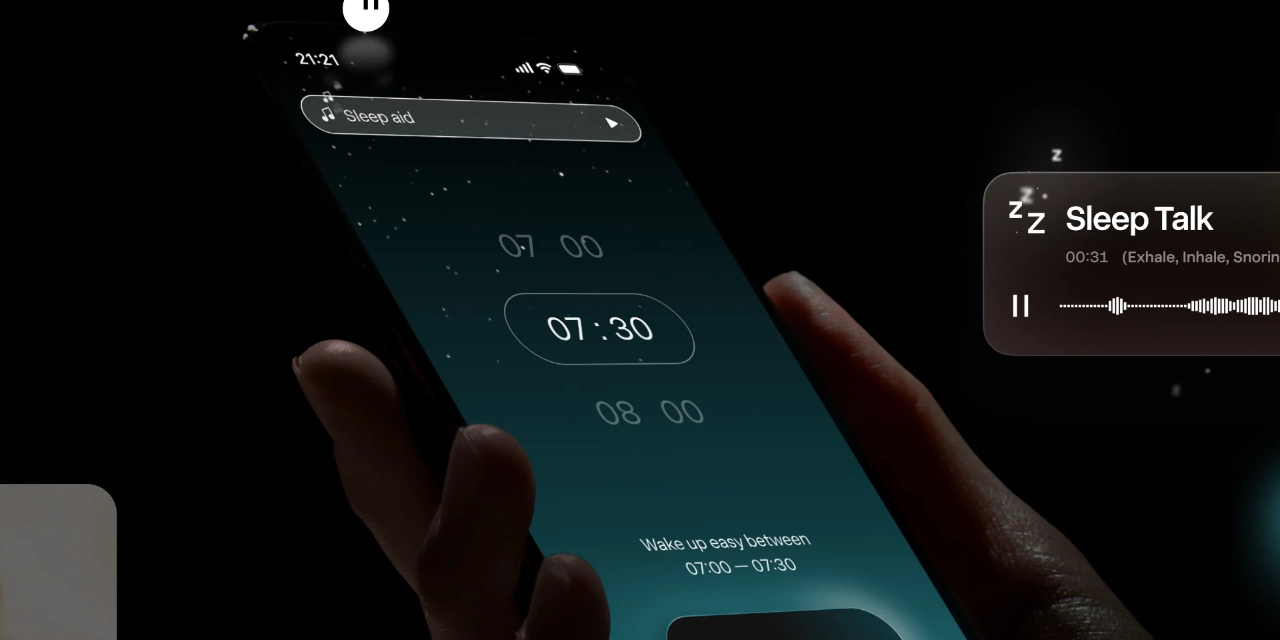
- Fires the alarm during lighter sleep inside a 30-minute window
- On the App Store since 2009, past 10 million downloads
- $29.99 a year, or $9.99 monthly, after a 7-day trial
No strap, no ring, nothing charging on your wrist. That convenience is the entire reason people pick this over a wearable, and it's also the source of every limitation below.
Note the pricing gap before you tap anything. Twelve monthly payments come to $119.88, which is four times the annual price for the identical product. Nobody should be paying monthly here.
Trust This: When You Actually Woke Up
Sleep and wake detection is the part the research treats kindly.
Consumer trackers are consistently good at spotting when you're asleep, which is why the smart alarm works as well as it does. Waking inside a lighter phase rather than mid-cycle genuinely does reduce that dragged-out grogginess, and it's the feature owners rave about.
There's a known bias, though. These devices are markedly weaker at identifying wakefulness than sleep, which means they tend to read a stretch of lying perfectly still as sleep and quietly inflate your total. So if the app reports eight hours and you're fairly sure you spent one of them staring at the ceiling, back yourself. You were there.
Ignore This: Your Deep Sleep Percentage
Now the uncomfortable part.
Research comparing consumer trackers against polysomnography, the clinical lab standard, puts sleep stage classification somewhere around 50 to 70% accurate. A 2021 study in the journal Sleep tested seven consumer devices and concluded they show promise for sleep and wake, but need to be more sensitive to detect stages properly.
Sit with that range for a second. At the optimistic end the app is wrong about roughly three stage calls in ten. At the pessimistic end it's wrong about half.
So when last night's deep sleep reads 47 minutes and tonight's reads 82, the honest interpretation is that you don't know. The trend across a month might mean something. Last night's figure, on its own, does not.
None of which makes Sleep Cycle accuracy unusually bad, to be fair to it. Wrist wearables costing several hundred dollars wrestle with the same problem, and a phone sitting on a bedside table is working from far less information than a sensor pressed against your skin all night.
The Free Tier Is Unusually Generous
| Free | Premium only |
| Smart alarm wake window | Snore and cough detection |
| Nightly sleep graph | Online backup |
| Sleep analysis and sleep goal | Full long-term statistics |
| Apple Health and Health Connect | Heart rate, respiratory rate |
| Database export | Sleep Aid library, sleep programs |
| Bedtime routine | Partner link, smart home links |
Read the left column again. The smart alarm, the nightly graph, the sleep goal and the health app integration all sit in the free tier.
That matters, because the alarm is the feature with the strongest evidence behind it, and you don't pay for it. Most apps put their best trick behind the paywall. This one didn't.
So is Sleep Cycle premium worth it? Only if you specifically want snore detection, the sleep aid library, or long-term statistics you'll actually open. At 8 cents a night that's an easy yes for some people and an obvious no for anyone who just wants a gentler alarm.
The Real Complaint Isn't the App
Sleep Cycle sits at 2.4 out of 5 on Trustpilot, which looks alarming until you check the sample.
| Rating | Share | People, of 23 |
| 5 star | 22% | About 5 |
| 4 star | 9% | About 2 |
| 3 star | 4% | About 1 |
| 2 star | 13% | About 3 |
| 1 star | 52% | About 12 |
Twenty-three reviews. Against more than ten million downloads, that's roughly two reviewers per million users, so treat the score as a signal about one thing rather than a verdict on the product.
And the theme running through those complaints is remarkably consistent. Hardly anybody is angry about sleep tracking. They're angry about billing: trials converting into annual charges nobody expected, cancellations that wouldn't go through, support replies that read like a script.
So this is an instruction, not a reason to avoid the app. Set a reminder for day five of the trial. Cancel through your phone's subscription settings rather than inside the app itself.
Where It Falls Over
- Shared beds confuse it, because a partner's movement and snoring register too
- Phone placement matters more than people expect
- Battery drain from a night of recording
- Occasional mid-night tracking dropouts, reported more on iOS
None of these are dealbreakers on their own. Together they explain why two people can use the same app for a month and come away with completely opposite opinions of it.
One Health Note Worth Reading
The snore and cough detection is genuinely interesting data. It is not a diagnosis.
If the app keeps flagging heavy snoring, or you're exhausted despite what looks like decent sleep, that's a reason to speak to a doctor rather than a reason to buy a different app. Consumer trackers aren't diagnostic tools and sleep apnoea is not something to self-assess from a phone graph.
There's a subtler risk too. Some people get anxious about their nightly scores, and worrying about sleep is a reliable way to sleep worse. If the numbers are starting to bother you, turn the tracking off and just keep the alarm.
Final Verdict
| Category | Score |
| Smart Alarm | 9 / 10 |
| Sleep vs Wake Tracking | 7.5 / 10 |
| Sleep Stage Accuracy | 4 / 10 |
| Free Tier Generosity | 9 / 10 |
| Subscription Handling | 4.5 / 10 |
| Overall Score | 7.5 / 10 |
The alarm is excellent, the free tier is more generous than it needs to be, and the sleep staging is guesswork dressed as measurement. Anyone reading a Sleep Cycle app review to decide whether to subscribe should install it free, use it for a fortnight, and let the alarm make the argument. Just don't let the trial roll over while you're deciding.
FAQs
How much does Sleep Cycle cost?
Premium runs $29.99 a year or $9.99 a month after a 7-day trial. The annual plan is four times cheaper.
How accurate is Sleep Cycle?
Good at telling sleep from wake, weak at stages. Research puts consumer stage classification around 50 to 70% against lab polysomnography.
Does it work without a wearable?
Yes. It uses the phone's microphone and accelerometer with the handset on your nightstand.
Does it drain the battery?
It records all night, so charge overnight. Several users report noticeable drain otherwise.
Does it work if you share a bed?
Less reliably. A partner's movement and snoring get picked up alongside yours.
Can it detect sleep apnoea?
No. Snore detection may prompt you to get checked, but only a clinician can diagnose it.
Pricing and features were accurate at the time of writing and vary by region and platform. Nothing here is medical advice; speak to a doctor about persistent sleep problems.
Do you agree with our review?
Comments (0)
All comments are reviewed and approved by an admin before appearing publicly.
No comments yet - be the first to share your thoughts.
Ask a Question
Got a question about this review or the brand? Ask below - our team answers what we can, and it'll appear here for other readers too.