Sutyo Sunglasses Review: The Tint Range Is the Whole Product
 By Alana Collins
Openly: affiliate links sit here and we earn if you use one. We have scored this a six and a half, and the reason is that only ten people have publicly reviewed it.
Photochromic lenses have existed for decades and they have always had the same flaw. They react to sunlight, which is why they barely darken behind a windscreen.
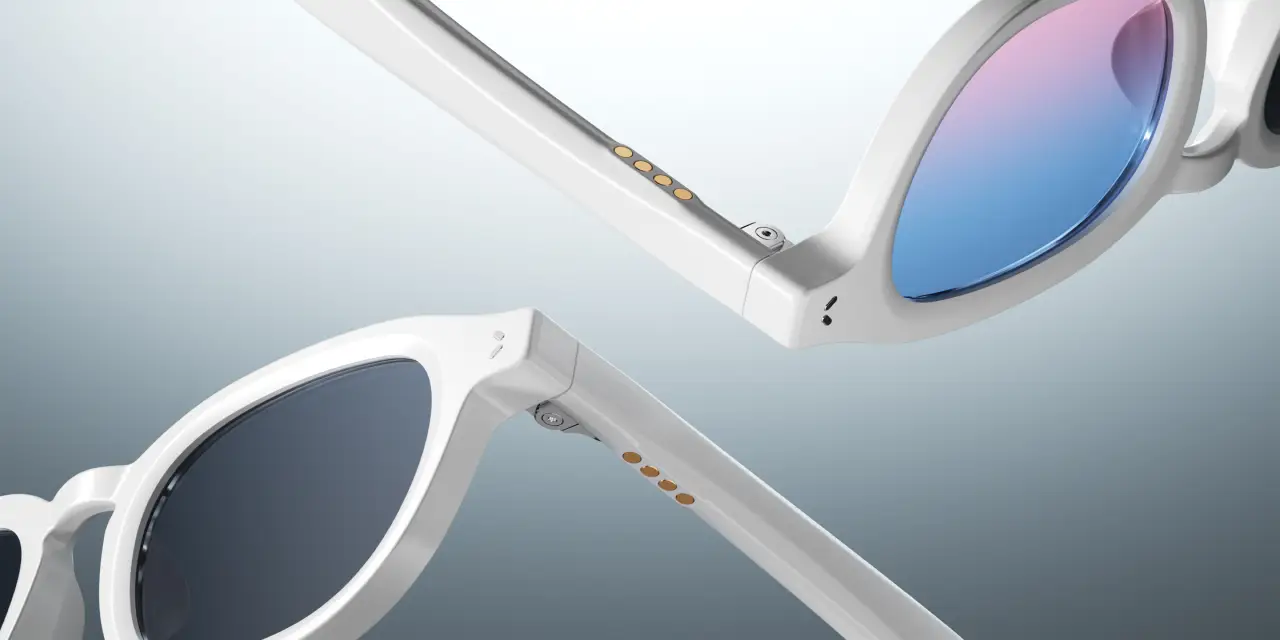
Sutyo does something different. You swipe the temple and the lens changes tint on command, and this Sutyo sunglasses review is mostly about what that range actually covers once you convert it out of marketing language.
The Oxide on Paper
| Spec | Sutyo Oxide |
| Price | $219 |
| Tint range | Category 1 to Category 3 |
| Control | Swipe along the temple |
| Weight | 35 grams |
| Frame | Bio-based Arkema PA11 nylon |
| Lens | UV400, anti-reflective, anti-fog |
| Battery | 10 days standby, magnetic charging |
| Water rating | IPX4 |
| Prescription | Supported |
The second row is the product. Everything else on this list is a well made pair of sunglasses wrapped around it.
Thirty five grams. A bio-based Arkema PA11 nylon frame made from recycled material, UV400 protection with anti-reflective and anti-fog coatings, and hinges assembled from six separate micro components machined to micron tolerances.
Ten days of standby on a charge, magnetic charging, an IPX4 water rating and support for prescription lenses. At $219 the hardware sits alongside a decent pair of branded sunglasses rather than somewhere above them, which is a more interesting price than it first looks for something with electronics inside.
What Category 1 to 3 Actually Means
Sutyo publishes the range as Cat.1 to Cat.3, which means nothing to most people. Converted, it means a great deal.
| Lens category | Light let through | Where you would use it |
| Category 0 | 80 to 100% | Indoors, clear lens |
| Category 1 | 43 to 80% | Overcast, dusk |
| Category 2 | 18 to 43% | Ordinary daylight |
| Category 3 | 8 to 18% | Bright sun, snow, water |
Category 1 lets through up to 80% of light. Category 3 lets through as little as 8%. That is a tenfold swing on one pair of frames.
Sunglass tint is standardised by how much visible light the lens transmits. Category 1 sits between 43% and 80%, which is dusk and overcast weather, while category 3 runs from 8% to 18% and is what you want on snow, water or a bright road.
So a swipe takes you across the full useful range of daily eyewear, from a lens you can wear walking into a building to one rated for glare off a lake. Most electrochromic sunglasses claim a range. Very few state it against the standard, and stating it is what makes this one checkable.
What it does not do is reach category 4. That is mountaineering territory, and it is not legal for driving in many places anyway, so the range chosen here is the practical one rather than the impressive one.
Where It Beats a Photochromic Lens
This is the real argument for the product, and it is a good one.
- Photochromic lenses react to ultraviolet light, not brightness
- Car windscreens block most ultraviolet, so they barely darken while driving
- They also take time to clear when you come back indoors
- An electrochromic lens changes because you told it to
The driving point is the one that sells this product. Anyone who has worn photochromic lenses in a car already knows the feeling of squinting through a stubbornly pale lens on a bright motorway, because the windscreen in front of them has filtered out the very ultraviolet the chemistry needs in order to react.
A swipe does not care about ultraviolet, the weather or the windscreen. It also clears instantly when you walk into a restaurant, which the chemistry of a photochromic lens simply cannot do.
The Problem With Recommending It
Now the part that costs it three points.
| Evidence available | Figure | Note |
| Reviews on the brand site | 10 | Very thin |
| Five star share | 80% | Of ten reviews |
| Independent testing | None found | Design press only |
| Years on the market | Roughly one | New brand |
Ten reviews. Eighty per cent of them at five stars, which is eight people.
There is design press coverage and an iF Design award behind this, and both are real credentials rather than invented ones. They are also awards for how a thing looks and how cleverly it has been conceived, which is a different question entirely from how it behaves after eighteen months of being shoved into a coat pocket.
What is missing is the ordinary stuff. Nobody has published what happens to the electrochromic layer after two summers of heat cycling on a dashboard, how the battery holds its charge in year three, or what a repair costs on the day one of those six micro components inside the hinge finally gives up.
The battery figure deserves its own caution too. Ten days is quoted as standby, and standby is not wear time, so the number tells you how long it survives in a drawer rather than how many days of actual swiping you get between charges.
Who Should Buy a Pair
Buy them if you drive a lot in changeable light, you have been disappointed by photochromic lenses for exactly that reason, and $219 sits within what you would spend on good sunglasses anyway.
Wait if you want a product with a service history behind it. Wait too if you would rather somebody else discovered the two year failure modes on their own money, or if the idea of putting your sunglasses on a charger strikes you as one device too many in a house already full of them.
Final Verdict
| Category | Score |
| Tint Range | 9 / 10 |
| Weight And Materials | 8 / 10 |
| Price Against Normal Sunglasses | 7.5 / 10 |
| Battery Transparency | 5 / 10 |
| Evidence Base | 3 / 10 |
| Overall Score | 6.5 / 10 |
The core idea is genuinely good and the specification is honest about it. A swipe from category 1 to category 3 covers roughly 80% down to 8% light transmission, a tenfold change that no photochromic lens achieves behind a windscreen, and 35 grams on a bio-based frame at $219 is fair against ordinary branded eyewear. What holds it at six and a half is that ten published reviews cannot tell you how electrochromic sunglasses age, a standby battery figure is not a usage figure, and nobody has yet had to repair one in public. Anyone reading a Sutyo sunglasses review this early is buying the idea rather than the track record.
FAQs
How much do Sutyo sunglasses cost?
$219 for the Oxide, with discount codes frequently applied on the brand's own site.
How dark do they get?
Category 3, which under the standard transmits between 8% and 18% of visible light.
How light do they get?
Category 1, which transmits between 43% and 80%. That is a roughly tenfold range end to end.
Are they better than photochromic lenses?
In a car, clearly. Photochromic lenses respond to ultraviolet, which windscreens mostly block.
How long does the battery last?
Ten days of standby on a magnetic charge. Standby is not the same as active wear time.
Can you get prescription lenses?
Yes, the Sutyo Oxide supports custom prescriptions alongside the electrochromic layer.
Pricing, specifications and published claims were accurate at the time of writing and change often on a newly launched product. Lens category transmission ranges are taken from the published sunglass standard rather than measured on this product. Long term durability of the electrochromic layer and battery is unproven at the time of writing.
Do you agree with our review?
Comments (0)
All comments are reviewed and approved by an admin before appearing publicly.
No comments yet - be the first to share your thoughts.
Ask a Question
Got a question about this review or the brand? Ask below - our team answers what we can, and it'll appear here for other readers too.