
Olight Review: The Lights Are Better Than the Store
 By Alana Collins
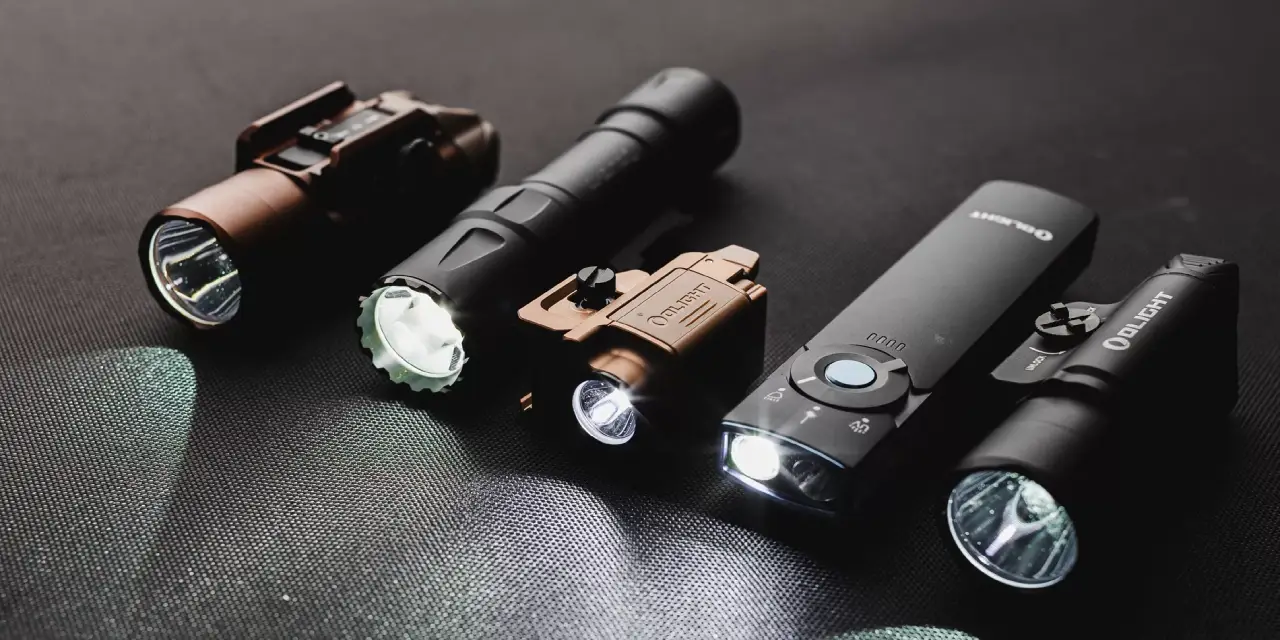
STORE RATING
Openly: affiliate links sit here and we earn if you buy through one. The score below splits the product from the company, because the evidence splits the same way.
Almost nobody complains about how bright an Olight is. The complaints are about everything that happens after the light stops working.
That is the short version of this Olight US review, and it comes from two very different piles of evidence. Independent testers measuring beams, and American buyers trying to get a dead flashlight replaced.
Same Brand, Two Very Different Reputations
| Trustpilot profile | Score | Reviews | One star |
| UK store | 4.6 / 5 | 3,874 | 4% |
| US store, olightstore.com | 2.5 / 5 | 81 | 64% |
| US main site, olight.com | 2.4 / 5 | 13 | 69% |
Four per cent one star in the UK. Sixty four per cent on the US store. Same brand, same lights, same warranty page.
This is the finding that made us write the article. Olight's UK storefront sits at 4.6 from nearly four thousand reviews, while the two American profiles sit around 2.5 with roughly two thirds of reviewers giving one star.
Sample sizes matter here, and we are not pretending they do not, because eighty one reviews is a small pool, unhappy customers are always keener to post than satisfied ones, and that combination tends to drag any small profile downwards regardless of how good the brand behind it actually is.
But the complaints are not random. They cluster around the same three things. Support that is hard to reach, shipping that stalls, and warranty claims that go nowhere.
What the Flashlights Actually Do
Now the good part, and it is genuinely good.
| Baton 4, standard edition | Figure | Source |
| Price | $54.99 | Retail listing |
| Claimed maximum | 1,300 lumens | Olight |
| Measured at 30 seconds | 1,441 lumens | Independent test |
| Time at full output | About 1.5 minutes | Independent review |
| Output after 10 minutes | 303 lumens | Independent test |
| Battery | 650 mAh 16340, proprietary | Olight |
Measured output came in 10.8% above the claim. That almost never happens in this category.
An independent tester put the Olight Baton 4 on a light meter and got 1,441 lumens at thirty seconds against a claimed 1,300. Most flashlight brands overstate their peak figure, so a light that beats its own number is a real point in the company's favour.
The catch is how briefly that number lasts. Full output holds for about a minute and a half before stepping down, and by ten minutes the light is putting out 303 lumens, which is 21% of its measured peak.
That is not a trick. Every small light does it to manage heat, and a pocket sized aluminium body simply cannot shed the warmth of 1,300 lumens for long, but it does mean the number printed on the box describes roughly 1.9% of the light's total runtime, so you should shop on the sustained figure rather than the headline one.
The Warranty Clause Worth Reading Twice
The Olight lifetime warranty is marketed prominently. In some ways the page is more generous than most.
No registration, no paperwork, fully transferable.
| What the warranty page says is covered | What the same page excludes |
| Built in rechargeable batteries, for life | Batteries that fail from ordinary usage |
| Charging systems and LEDs | Batteries that fail from aging |
| Defects in materials or workmanship | Natural capacity decline |
| Transferable, no paperwork needed | MCC charging cables after one year |
Built in batteries are covered for life. Batteries that fail from aging are not. Read those two rows side by side.
Lithium cells do not usually fail from a defect. They fail from use and age, slowly losing capacity over several hundred charge cycles, which is exactly the failure the exclusion describes.
So the Olight lifetime warranty covers the battery against the thing that rarely happens and excludes the thing that eventually happens to every battery. On a light where the cell is sealed inside the body, that distinction decides whether a flashlight lasts ten years or three.
This lines up closely with the most repeated complaint on the US profiles, where buyer after buyer describes an expensive light that stopped holding a charge, a sealed battery they could not replace themselves, and a warranty claim that went nowhere once they tried to use it.
Proprietary Batteries, the Quiet Cost
Many Olight models run on custom cells that only charge through Olight's own magnetic system.
- The Baton 4 standard edition uses a 650 mAh proprietary 16340 cell
- The newer Baton 4 Pro moves to a user replaceable battery
- MCC magnetic cables carry only a one year warranty
- The Premium Edition adds a wireless charging case for $40 more
That Pro change is telling.
Olight has clearly heard the battery complaint, and the fix it chose is a light you can open and re-cell yourself rather than a warranty that finally covers aging, which is a sensible engineering answer to a real problem even if it arrives a full product generation later than the people posting one star reviews would have liked.
Forty dollars for the charging case is a 72.7% premium on the standard light. Nice to have. Not essential.
Who Should Buy From Olight
Buy if you want a compact, well made light that measures above its own specification, you are comfortable treating the battery as a part that will eventually need replacing at your own cost, and you would rather have excellent output today than a promise about year five.
Prefer models with user replaceable cells where they exist. If you are in the US, consider buying through a large authorised retailer rather than direct, so that returns in the first weeks run through a store with its own customer service.
Final Verdict
| Category | Score |
| Light Output | 9 / 10 |
| Build And Design | 8.5 / 10 |
| Value | 7.5 / 10 |
| Warranty In Practice | 4.5 / 10 |
| US Customer Service | 3.5 / 10 |
| Overall Score | 6.5 / 10 |
Six and a half out of ten, and it is two scores stitched together. The hardware earns an eight or better, with measured output 10.8% above the claim and genuinely good build quality. The US buying experience earns a four at best, with 64% one star reviews on the American store against 4% in the UK, and a lifetime warranty that excludes battery aging on lights whose batteries are sealed in. Anyone reading an Olight US review should buy the light and plan for the battery, because on current evidence the warranty will not do that planning for you.
FAQs
Is Olight a good flashlight brand?
On output and build, yes. Independent testing of the Baton 4 measured 1,441 lumens against a 1,300 lumen claim.
Does the lifetime warranty cover the battery?
Defects, yes. Batteries that fail from ordinary use, aging or natural capacity decline are excluded.
Why are US reviews so much worse than UK reviews?
US complaints focus on reaching support, shipping delays and declined warranty claims. The US pools are also far smaller, which exaggerates any pattern.
How long does full brightness last?
On the Baton 4, around a minute and a half before stepping down to protect against heat.
Can I replace the battery myself?
On many models, no. The newer Baton 4 Pro does use a user replaceable cell.
What is the return window?
Thirty days for unused items in original packaging, with prepaid return labels in some regions.
Prices, review counts, warranty wording and test figures were accurate at the time of writing and change often. Output and runtime figures come from independent published testing rather than our own measurements. Trustpilot pools of under a hundred reviews should be treated as indicative rather than conclusive. Confirm current warranty terms with Olight before relying on them.
Do you agree with our review?
Comments (0)
All comments are reviewed and approved by an admin before appearing publicly.
No comments yet - be the first to share your thoughts.
Ask a Question
Got a question about this review or the brand? Ask below - our team answers what we can, and it'll appear here for other readers too.